
Introduction to License Renewal
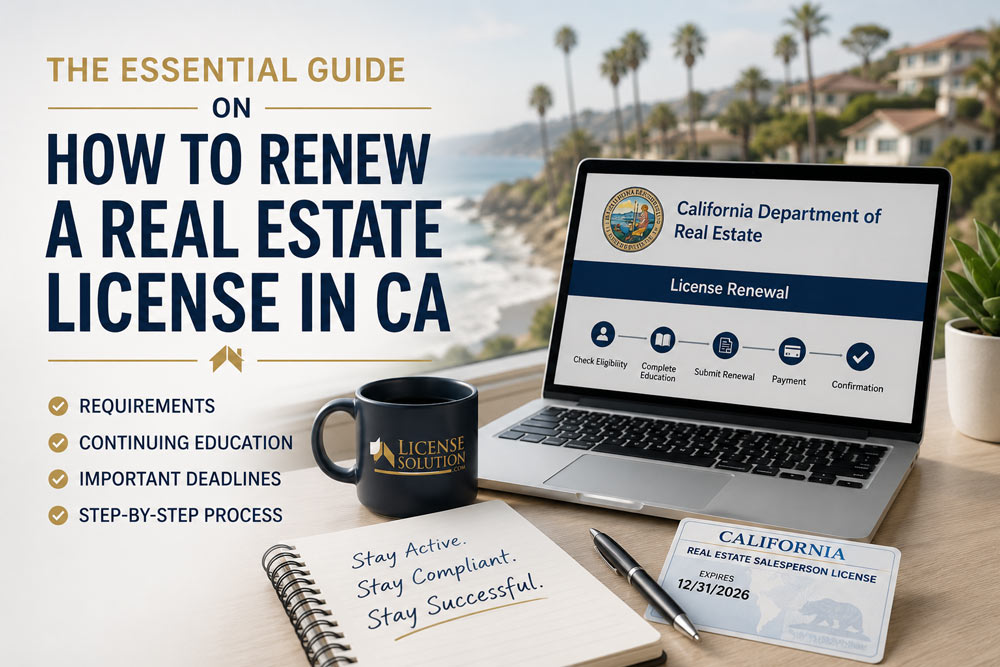
Renewing your California real estate license is a straightforward process that involves completing continuing education courses and submitting a renewal application. The California Department of Real Estate (DRE) oversees this entire process, ensuring that all real estate agents and brokers remain compliant with state regulations.
Understanding the license renewal process is crucial for real estate professionals who want to maintain their license and continue practicing real estate in California. A real estate license is essential for any agent or broker looking to operate legally within the state. Although the DRE sends a renewal reminder approximately 90 days before the license expiration date, it remains the responsibility of the real estate agent or broker to renew their license on time. Failure to renew before the expiration date results in the license becoming inactive, which means the individual cannot legally conduct real estate activities until the license is renewed and reactivated.
To successfully renew a real estate license in California, one must complete the required continuing education courses, renew your real estate enrollment if necessary, submit the renewal application either through the DRE’s eLicensing system or by mail, and pay the applicable renewal fee. This process ensures that real estate professionals stay up to date with the latest regulations and maintain their eligibility to practice in California’s competitive market.
Understanding Expiration Date
- A California real estate license is valid for four years from the date of issue, after which it must be renewed to avoid expiration.
- The license expiration date is crucial, and real estate agents and brokers must renew their license before this date to avoid any lapse in their license. On time renewals ensure you can continue practicing legally and avoid late renewal penalties, while late renewal can result in additional fees and a temporary inability to perform real estate activities.
- The DRE sends a renewal reminder 90 days before the license expiration date, but it’s essential to track the expiration date to ensure timely renewal. If you miss the deadline, the late renewal process allows for late renewals up to two years after expiration, provided you complete the required continuing education and pay a late fee.
- If a real estate license expires, the agent or broker cannot practice real estate until the license is renewed. This highlights the importance of time renewal to prevent your license from becoming inactive and to avoid legal and financial consequences.
- The expiration date can be found on the DRE’s website or by contacting the DRE directly.
Real Estate Continuing Education
- Completing CE courses is a requirement for real estate license renewal in California.
- The DRE requires 45 hours of continuing education courses for real estate agents and brokers, which must be completed before the license expiration date.
- Continuing education courses cover various topics, including fair housing, risk management, and trust fund handling. Each course may require passing final exams to earn credit.
- Real estate agents and brokers can complete continuing education courses online or in-person through a DRE-approved real estate school. California limits reading time for online or correspondence courses, which can affect how quickly you complete your coursework.
- The courses must be completed within the four-year period preceding the license expiration date. Agency is one of the required core course topics for renewal.
License Renewal Process
- The license renewal process involves completing continuing education courses, submitting a renewal application, and paying the renewal fee.
- Real estate agents and brokers can renew a broker license online using the DRE’s eLicensing system or by mail.
- The renewal application must be submitted before the license expiration date to avoid late fees. During the renewal process, licensees must enter course completion numbers or completion numbers to validate their education requirements.
- The DRE reviews the renewal application and verifies the completion of continuing education courses before renewing the license. If an extension or exemption is needed, a formal request must be submitted to the DRE.
- The renewal process typically takes a few days to a few weeks, depending on the method of submission.
First Renewal
- The first renewal of a real estate license in California requires completing the required continuing education courses and submitting a renewal application.
- The DRE provides a renewal reminder 90 days before the license expiration date, and real estate agents and brokers must renew their license before this date.
- The first renewal is an opportunity for real estate agents and brokers to review and update their knowledge of California real estate laws and regulations.
- The DRE requires real estate agents and brokers to complete a certain number of hours of continuing education courses before the first renewal.
- The first renewal is also an opportunity for real estate agents and brokers to change their license type or add endorsements.
For any subsequent renewal, the requirements or continuing education hours may differ from those of the first renewal.
If a real estate license has been expired for more than two years, the licensee must restart the licensing process, which may include retaking exams and re-establishing sponsorship if applicable.
Renewing Online
- Renewing a real estate license online is a convenient and efficient way to complete the renewal process.
- The DRE’s eLicensing portal allows real estate agents and brokers to renew their license online and pay the renewal fee using a credit or debit card. The California Department of Real Estate website serves as the primary real estate website for managing license renewal, submitting applications, and accessing regulatory information.
- Online renewal is available 24/7, and real estate agents and brokers can renew their license from anywhere with an internet connection. Some online education providers also offer unlimited access to CE courses, webinars, and resources, making it easier to complete all required coursework for license renewal.
- The DRE’s eLicensing portal is secure and easy to use, and real estate agents and brokers can track the status of their renewal application online.
- Online renewal is also faster than mail renewal, with most renewals being processed within a few days.
Estate License Renewal Requirements
- The DRE requires real estate agents and brokers to complete continuing education courses and submit a renewal application to renew their license and remain licensed to continue practicing.
- The renewal application must be submitted before the license expiration date to avoid late fees.
- Real estate agents and brokers must pay the renewal fee, which varies depending on the license type.
- Properly managing licenses and staying current with renewal requirements ensures uninterrupted ability to conduct real estate transactions.
- The DRE verifies the completion of continuing education courses and reviews the renewal application before renewing the license.
- The DRE also requires real estate agents and brokers to disclose any changes to their license information, such as a change of address or phone number.

Consumer Protection
- Consumer protection is an essential aspect of real estate practice in California.
- Real estate agents and brokers must comply with California real estate laws and regulations to protect consumers.
- The DRE provides resources and support to help real estate agents and brokers understand their responsibilities and obligations to consumers.
- Consumer protection includes fair housing, risk management, and trust fund handling.
- Real estate agents and brokers must also disclose any potential conflicts of interest to consumers.
Implicit Bias Training
- Implicit bias training is a requirement for real estate license renewal in California.
- The DRE requires real estate agents and brokers to complete implicit bias training as part of their continuing education courses.
- Implicit bias training helps real estate agents and brokers understand and overcome their biases to provide fair and equal treatment to all clients.
- The training covers topics such as fair housing, diversity, and inclusion.
- Implicit bias training is an essential aspect of real estate practice in California, and real estate agents and brokers must complete the training to renew their license.
Real Estate School Options
- Real estate school options are available for real estate agents and brokers looking to complete their continuing education courses.
- The DRE approves real estate schools that offer continuing education courses, and real estate agents and brokers can choose from a variety of schools.
- Real estate schools offer online and in-person courses, and real estate agents and brokers can choose the format that best suits their needs.
- Many real estate schools employ real estate experts to design and teach their courses, ensuring the content is both relevant and high-quality.
- The DRE requires real estate schools to provide high-quality education and training to real estate agents and brokers.
- Real estate schools must also provide a certificate of completion to real estate agents and brokers who complete their courses.
Checking License Status
- Checking license status is essential for real estate agents and brokers to ensure that their license is active and in good standing.
- The DRE provides a public license information database that allows real estate agents and brokers to check their license status online.
- Real estate agents and brokers can also contact the DRE directly to check their license status.
- Checking license status helps real estate agents and brokers avoid any lapse in their license and ensure that they can continue to practice real estate in California.
- The DRE also provides a license status report that shows the current status of a real estate agent’s or broker’s license.
Inactive License
- An inactive license occurs when a real estate agent or broker fails to renew their license before the expiration date.
- The DRE allows real estate agents and brokers to reactivate their license within two years of the expiration date.
- Real estate agents and brokers must complete the required continuing education courses and submit a renewal application to reactivate their license.
- The DRE requires real estate agents and brokers to pay a late fee to reactivate their license.
- An inactive license can result in a lapse in the real estate agent’s or broker’s ability to practice real estate in California.
Renewal Resources
- Renewal resources are available for real estate agents and brokers looking to renew their license.
- The DRE provides a renewal guide that outlines the steps required to renew a real estate license.
- Real estate agents and brokers can also contact the DRE directly for assistance with the renewal process.
- The DRE’s website provides a wealth of information on the renewal process, including forms, fees, and deadlines.
- Renewal resources help real estate agents and brokers navigate the renewal process and ensure that they can continue to practice real estate in California.
License Renewal Fees
- License renewal fees vary depending on the license type and the method of renewal.
- The DRE requires real estate agents and brokers to pay the renewal fee when submitting their renewal application.
- The renewal fee can be paid online or by mail, and the DRE accepts credit or debit cards.
- The DRE also requires real estate agents and brokers to pay a late fee if they fail to renew their license before the expiration date.
- License renewal fees help the DRE cover the costs of regulating the real estate industry and providing resources and support to real estate agents and brokers.
Common Mistakes to Avoid
When it comes to renewing your California real estate license, avoiding common pitfalls can save you time, money, and unnecessary stress. One of the most frequent mistakes is neglecting to complete the required continuing education courses before the license expiration date. Missing this crucial step can result in late fees, penalties, or even the cancellation of your estate license, disrupting your ability to conduct real estate business in California.
Another error is failing to submit the renewal application and pay the renewal fee on time. Delays in submitting these materials to the California Department of Real Estate can cause your license to lapse, meaning you cannot legally practice real estate until your license is reinstated. Additionally, choosing a continuing education provider that is not approved by the California Department can lead to your courses not being recognized, forcing you to retake them and further delaying the renewal process.
It’s also important to keep a close eye on your license expiration date and set reminders well in advance. Waiting until the last minute means you may wait too long to complete your education or submit your renewal application, increasing the risk of errors and missed deadlines. By staying organized and proactive, you can ensure a smooth renewal process and maintain your ability to serve clients in the competitive California real estate market.
Tips for Staying on Track with License Renewal
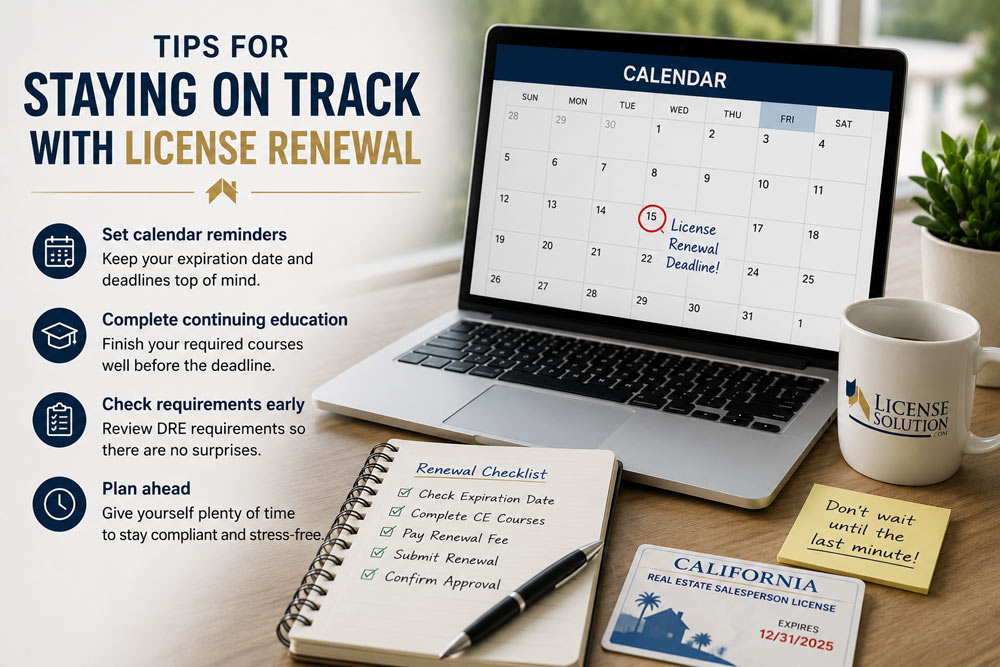
Staying on top of your California real estate license renewal is essential for uninterrupted business and compliance with state regulations. One effective strategy is to set calendar reminders for your license expiration date and key renewal deadlines, giving yourself plenty of time to complete all required continuing education courses. This proactive approach helps you avoid last-minute scrambles and ensures you meet all requirements for real estate license renewal.
Utilizing online resources, such as the California Department of Real Estate’s eLicensing portal, can streamline the renewal process. The portal allows you to submit your renewal application, pay fees, and track your renewal status from anywhere, making it easier to stay organized. Selecting a reputable continuing education provider that offers flexible scheduling—whether online or in-person—can also help you complete your courses at your own pace and on your own schedule.
Joining a real estate association or networking group is another great way to stay informed about changes in California real estate laws, best practices, and upcoming deadlines, so join today to keep renewal updates and deadlines on your radar. These groups often provide updates and reminders about the renewal process, helping you stay compliant and up-to-date. By following these tips, you can ensure your real estate license remains active and you continue to practice real estate in California without interruption.
Conclusion
Renewing your California real estate license is a vital part of maintaining your professional standing and continuing to serve clients in a dynamic and competitive market. By understanding the renewal process, completing the necessary continuing education courses, and submitting your renewal application and fee on time, you set yourself up for a smooth and successful real estate license renewal.
Staying organized, avoiding common mistakes, and leveraging available resources from the California Department of Real Estate can make the renewal process straightforward and stress-free. Whether you are a broker, salesperson, or new to the industry, prioritizing ongoing education and timely renewal ensures you remain compliant with california business requirements and DRE regulations and ready to meet the needs of your clients.
By making license renewal and continuing education a regular part of your professional routine, you not only protect your ability to practice real estate but also make it easier to renew your license and position yourself for long-term success in the ever-evolving world of California real estate. Stay proactive, stay informed, and continue building a rewarding career as a trusted real estate expert.